
If you've been looking for a simple, low-tech tool that can completely transform the energy in your language classroom, mini whiteboards might be exactly what you need. These small, erasable boards have become one of my favourite classroom tools, and once you try them, I think they'll become one of yours too.
In this post, I'll walk you through why they work so well in language teaching, and practical activity ideas you can use in your very next class.
Why they work so well for language teaching
The ephemeral nature removes the pressure
Let me get a bit poetic here. There's something about paper that makes writing feel permanent and, therefore, high(er)-stakes. Students hesitate. They second-guess themselves. (Ok, fine, you got me. I hesitate and second guess if the my idea is worthy of the paper!) Some even reach for pencils. A whiteboard is the opposite: it's meant to be erased. That simple fact gives students psychological permission to try, make mistakes, and try again, which is exactly what language learning requires.
Everyone participates at the same time
In many whole-class activities or games, one or just a few students responds while the others wait/observe. With mini whiteboards, everyone can be involved simultaneously and can even hold up their board at the same moment. There's nowhere to hide, and that's a good thing.
The size encourages focused answers
A small board demands a small/short answer. For vocabulary work, grammar practice, and quick concept checks, the physical constraint keeps students focused on the essential form or structure rather than writing lengthy responses.
You get instant, whole-class informal assessment
As a teacher, being able to glance across a room and see 20 responses at once is quite useful. You can immediately identify misconceptions, spot who needs support, and adjust your next move, and the best part: all without collecting papers, waiting for online submissions, or calling on individual students. It's informal assessment at its most efficient.
"But aren't mini whiteboards for kids?"
I had seen mini boards used all over the place with younger students. I was a bit hesitant to bring them into my higher-ed classroom. Here's what I've found in practice: adult learners love them. The novelty, the physicality, and the game-like quality of the activities actually make them more engaged. When my Business English students at college level were playing the activities I describe below, they were laughing, competing, and immersed in the language and on-task. It was almost like the mini board combined with the game removed the formality that so often gets in the way of language practice.
Mini whiteboard activity ideas for language classes
Sentence drawing → Students draw a word, phrase, or target-language sentence while teammates guess.
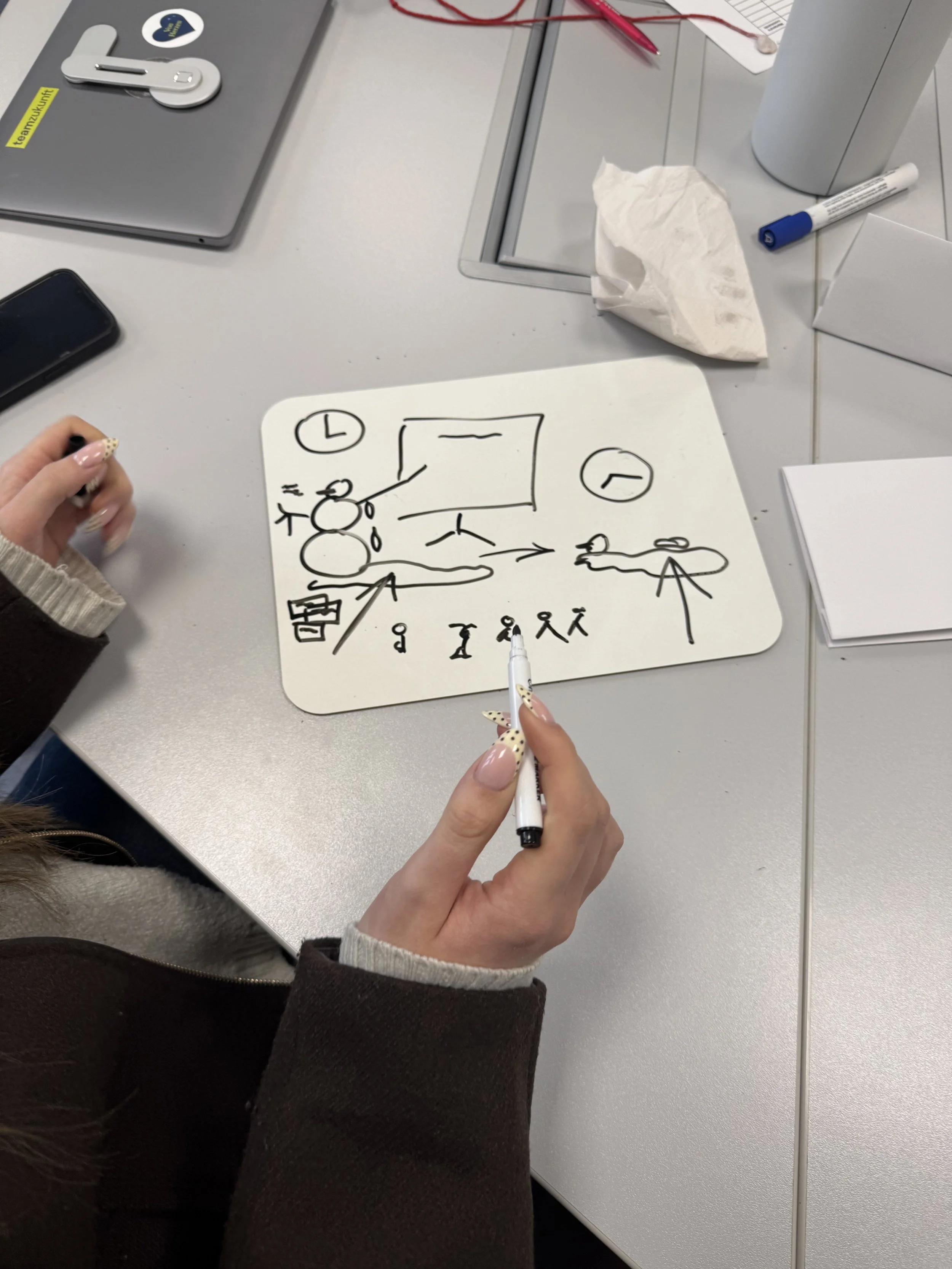
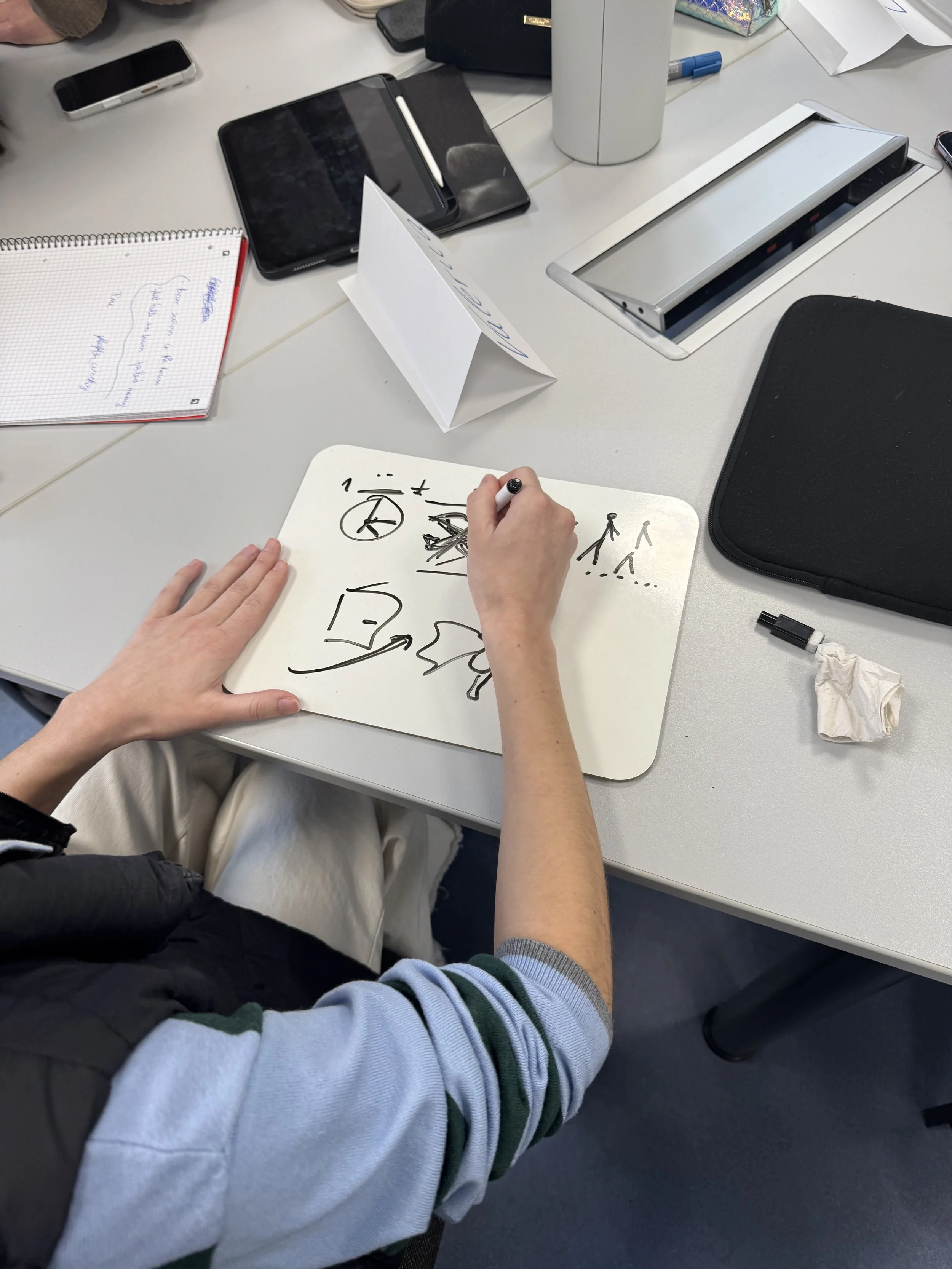
Vocabulary sprint → Read a definition or synonym; students write the target word with correct spelling and hold up simultaneously.
Quick grammar check → Display a sentence (correct or incorrect) and ask students to correct it, circle the error, or choose the right form.
Brainstorm burst → Give a topic and 60 seconds. Students write as many related words or phrases as they can. Excellent as a warmer or to surface vocabulary gaps before a lesson.
True or false response → For comprehension checks, students write T or F (or ✓/✗) in response to statements, then hold up.
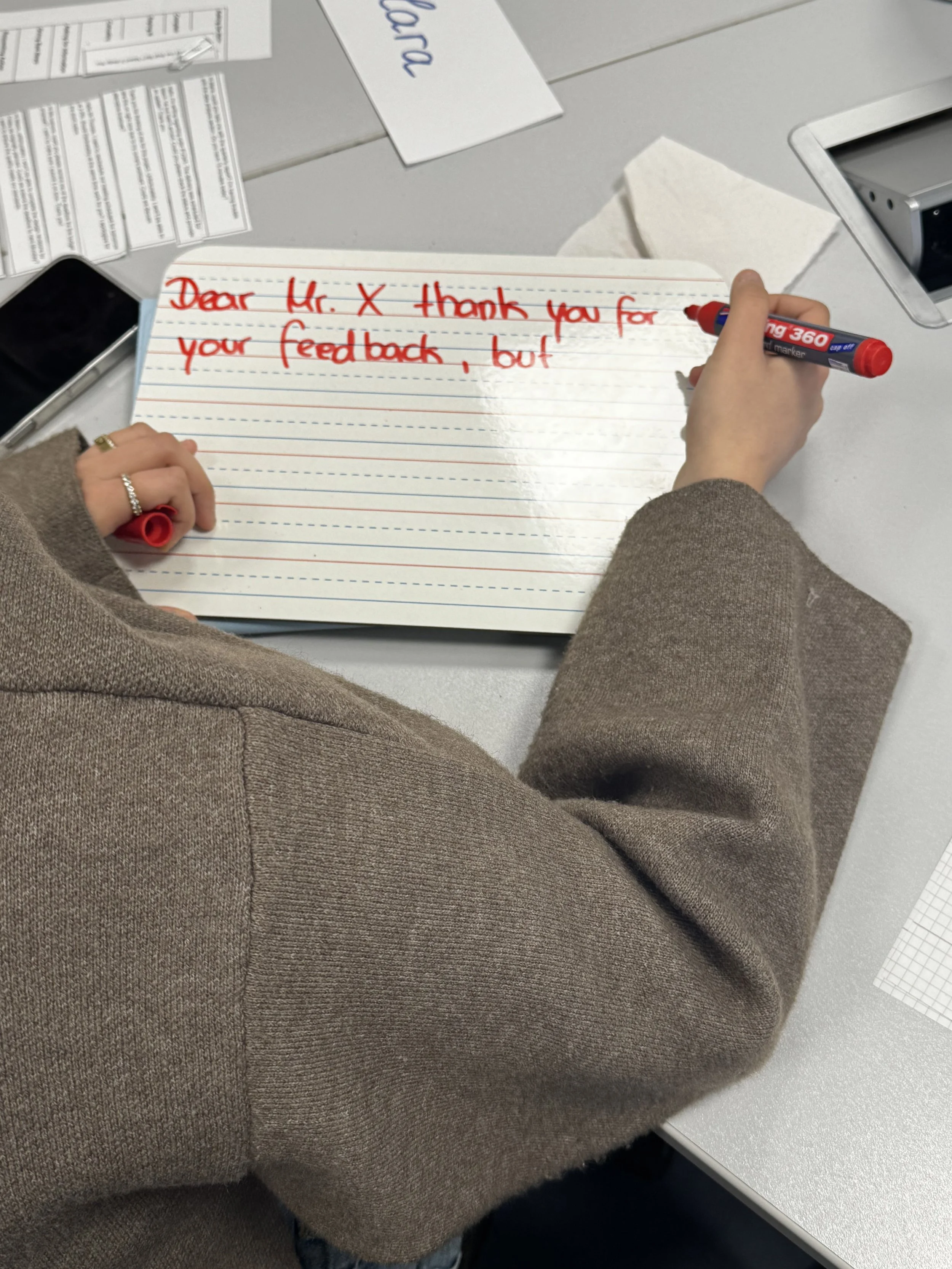
Peer feedback round→One student writes a short sentence; then passes the board to the student next to them to improve/assess.
Collocations challenge → Give a key word and ask students to write as many strong collocations as they can. Compare boards and build a class list.
Sentence starters → Give a sentence beginning; students complete it in a specific tense, register, or structure. Works for grammar consolidation and speaking preparation.
Relay writing → Give a prompt and have the first student start the sentence/part of the paragraph. Pass the board to the next student to add to it. Keep going until the sentence/paragraph is complete.
Register rewrite → Give students an informal sentence and ask them to rewrite it in formal or professional English. Great for Business English and academic writing contexts.
Ready to Try It?
Mini whiteboards are one of those tools that feel almost too simple. You just wait until you use them and watch your students light up. They can help lower the affective filter, increase participation, and give you immediate insight into what your students actually know. And all of that for the price of a nice dinner.
If you try any of these activities, I'd love to hear how it goes. Leave a comment below, drop me a message at hola@marianaslearning.space or find me on LinkedIn. I love hearing what works (and what gloriously doesn't) in other teachers' classrooms.
And if you'd like to explore more hands-on, practical teaching strategies like these, including how to integrate digital tools and AI into your language classroom, take a look at my workshops. They're designed for language teachers like you who want ideas they can actually use.
Ps. Search online for "mini dry-erase whiteboards bulk". I paid around €40 for a class set of 30 (the ones I bought, even included markers and the cutest little erasers).