
First Day of Language Class: How to Build Connection, Community & Confidence
Let me say something that might be a little controversial → Your students need to do a whole lot more than go through the syllabus on the first day of class.
They need to feel like they belong in your classroom. They need to know that you see them as people, not just learners. And they need to leave that first class thinking I think I'm going to be okay here.
YES, I know.
The syllabus is important. So is the textbook. So are the learning outcomes and the grading breakdown. But all of that can coexist with a first day that builds the human foundation your class needs to work.
If you’re new here, ¡hola! I'm Mariana Ramírez, an AI and EdTech specialist for language educators. I've been teaching English and Business English in higher ed for years, and my first day has evolved a lot. I thought that because it was higher-ed, I needed to get down to business, after all, these were college students. Little did I know, they were also people. (I know, right?) What I'm sharing here is what works for my context, but I am sure that with a few tweaks, you’ll make it yours. It's designed for a longer class block, but I'll show you how to split it if you're working with less time.
Why the First Day Is About More Than Logistics
Most first days in higher ed follow the same script: go through the syllabus, explain the grading, remind students of the attendance policy, dismiss early. Sound familiar?
And then we wonder why students don't feel engaged by week three.
Language learning is one of the most vulnerable things a person can do in a classroom. Students are asked to speak imperfectly, be corrected, and take risks in front of strangers. In higher ed, they are more often than not placed in your classroom without choosing to be there. Whether they engage willingly depends almost entirely on how safe they feel.
That safety is built on day one.
Before you even get to day one, it's worth pausing to reflect on what kind of semester you want to build. I wrote a reflection guide for language teachers doing exactly that: How to Plan Next Semester With Intention. Check that out.
A Note on Time
I teach a 4-hour block (4 x 45 minutes), so I have the luxury of doing all of this in one session. If you have a shorter class, don't panic. I'll show you how to split it across the first two classes. And yes, some will raise an eyebrow at "spending" this much time on connection activities. Consider it an investment instead.
Remix My First Day Lesson Plan
1. Start With a Low-Effort, High-Insight Survey
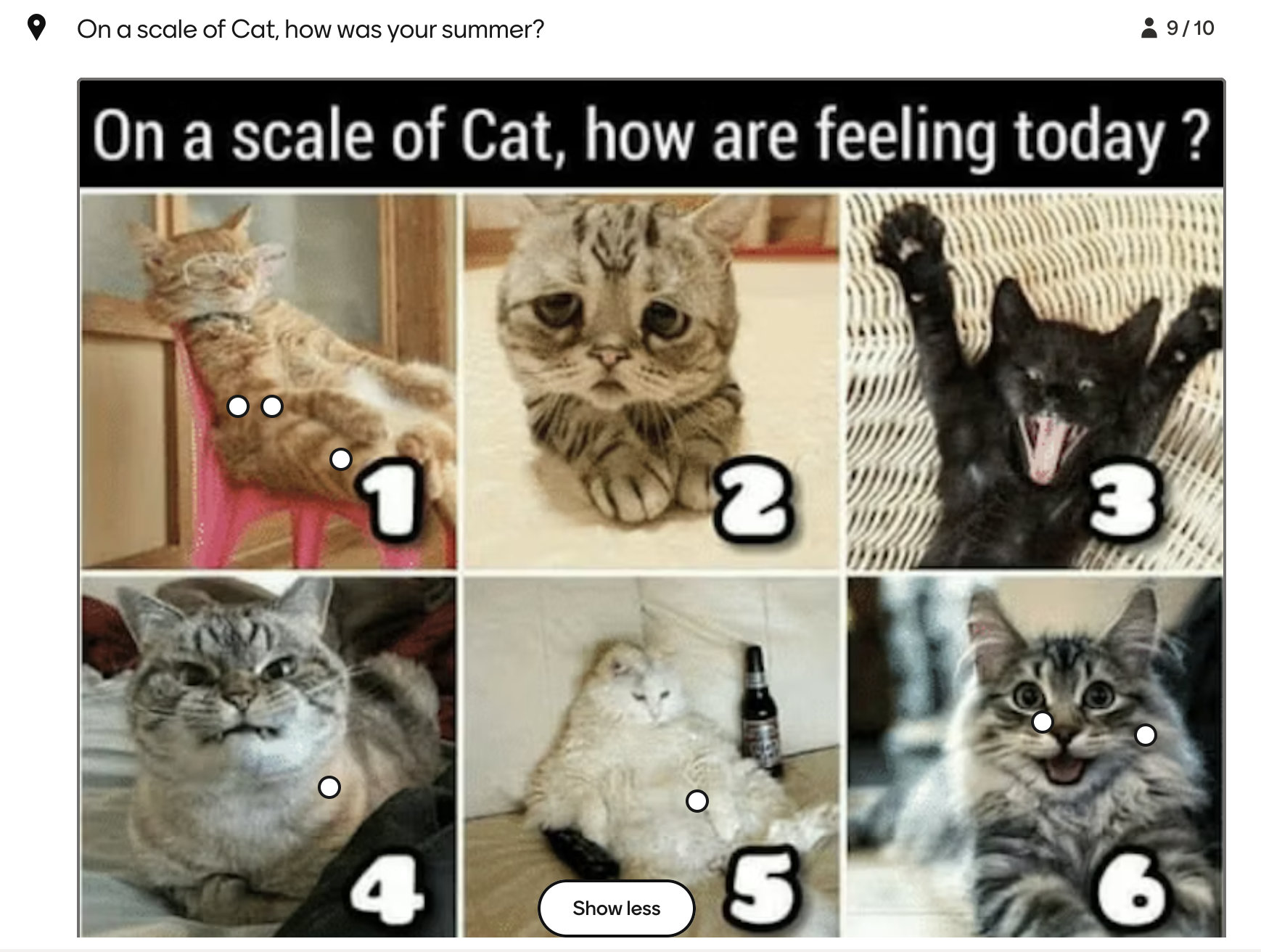
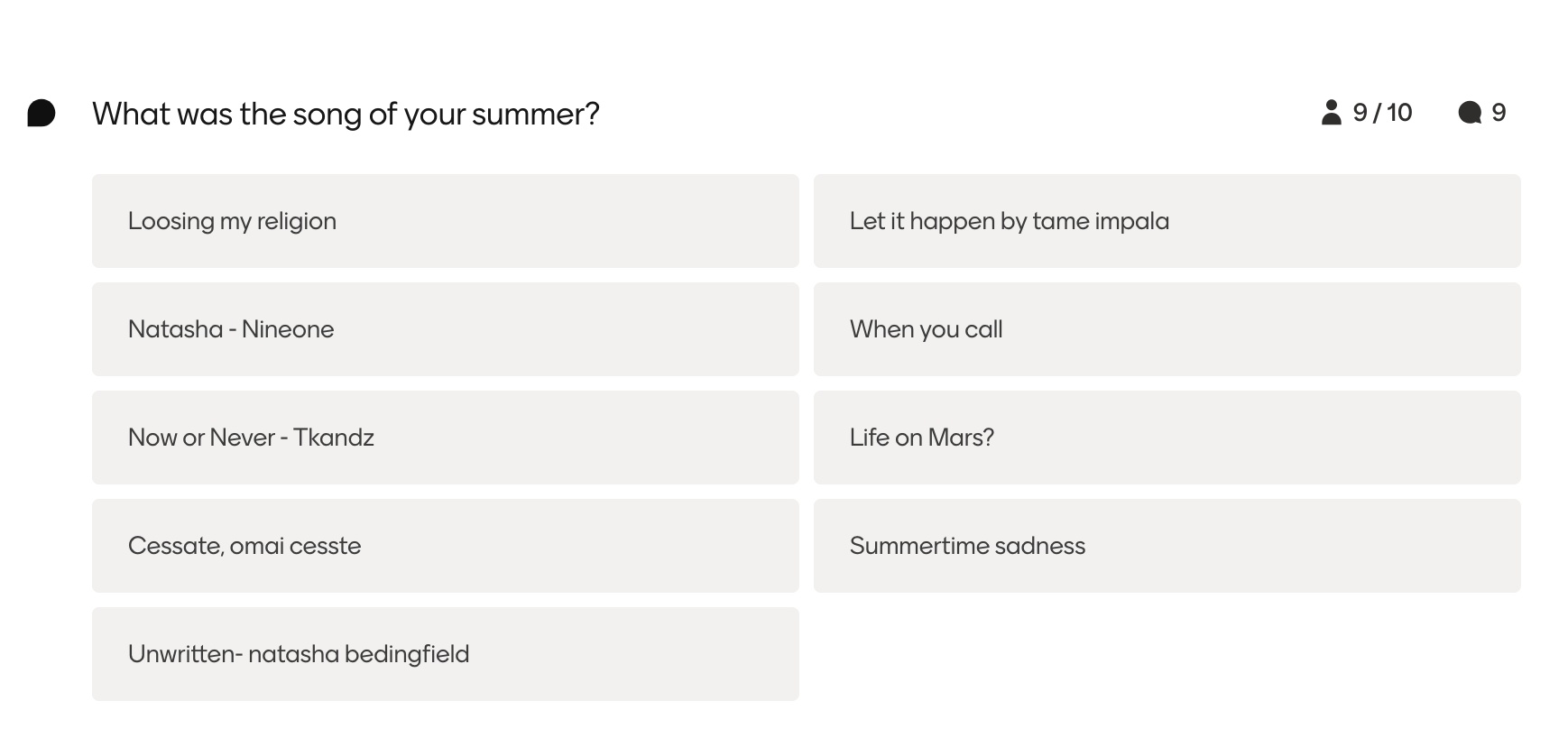
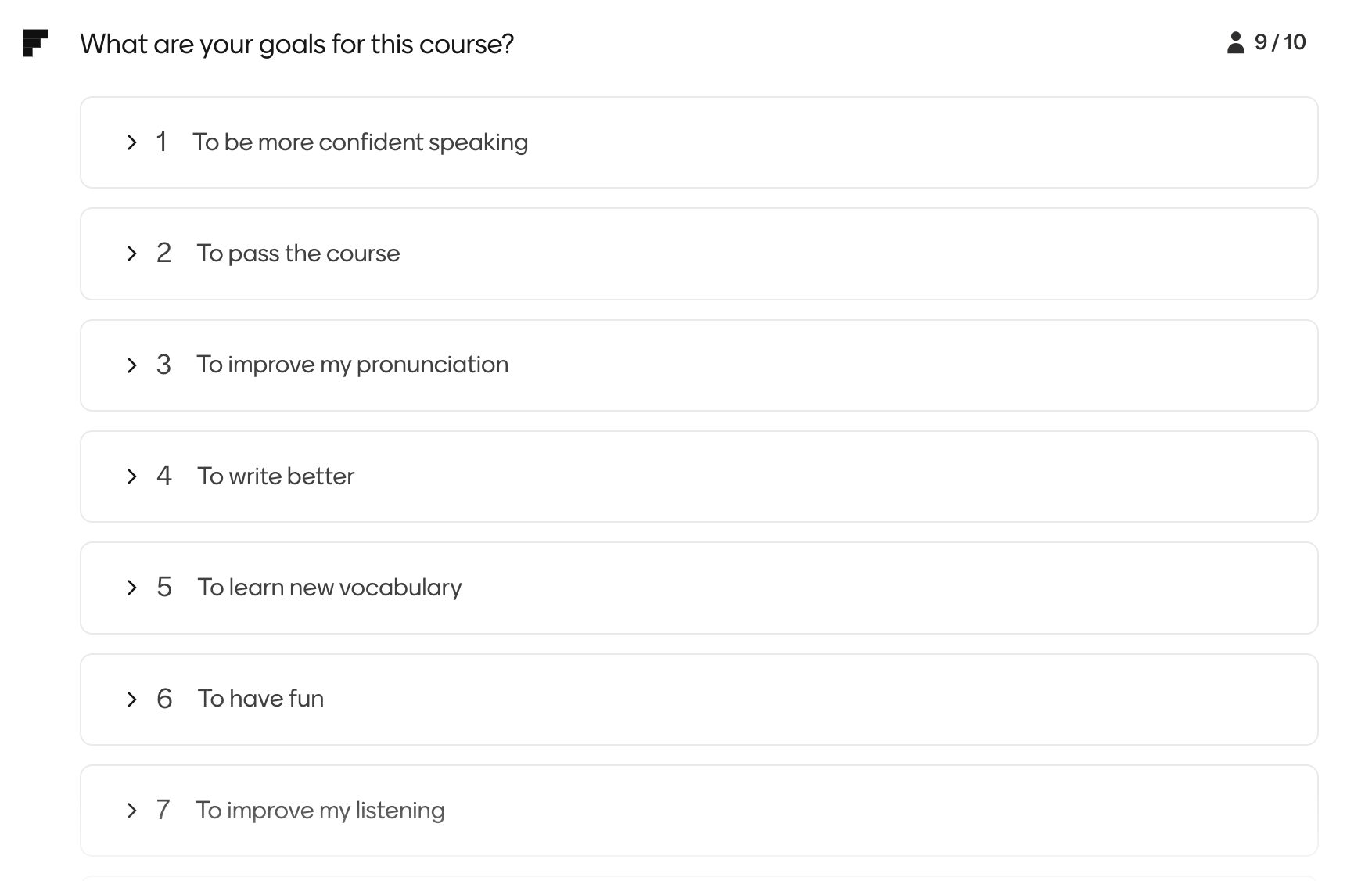
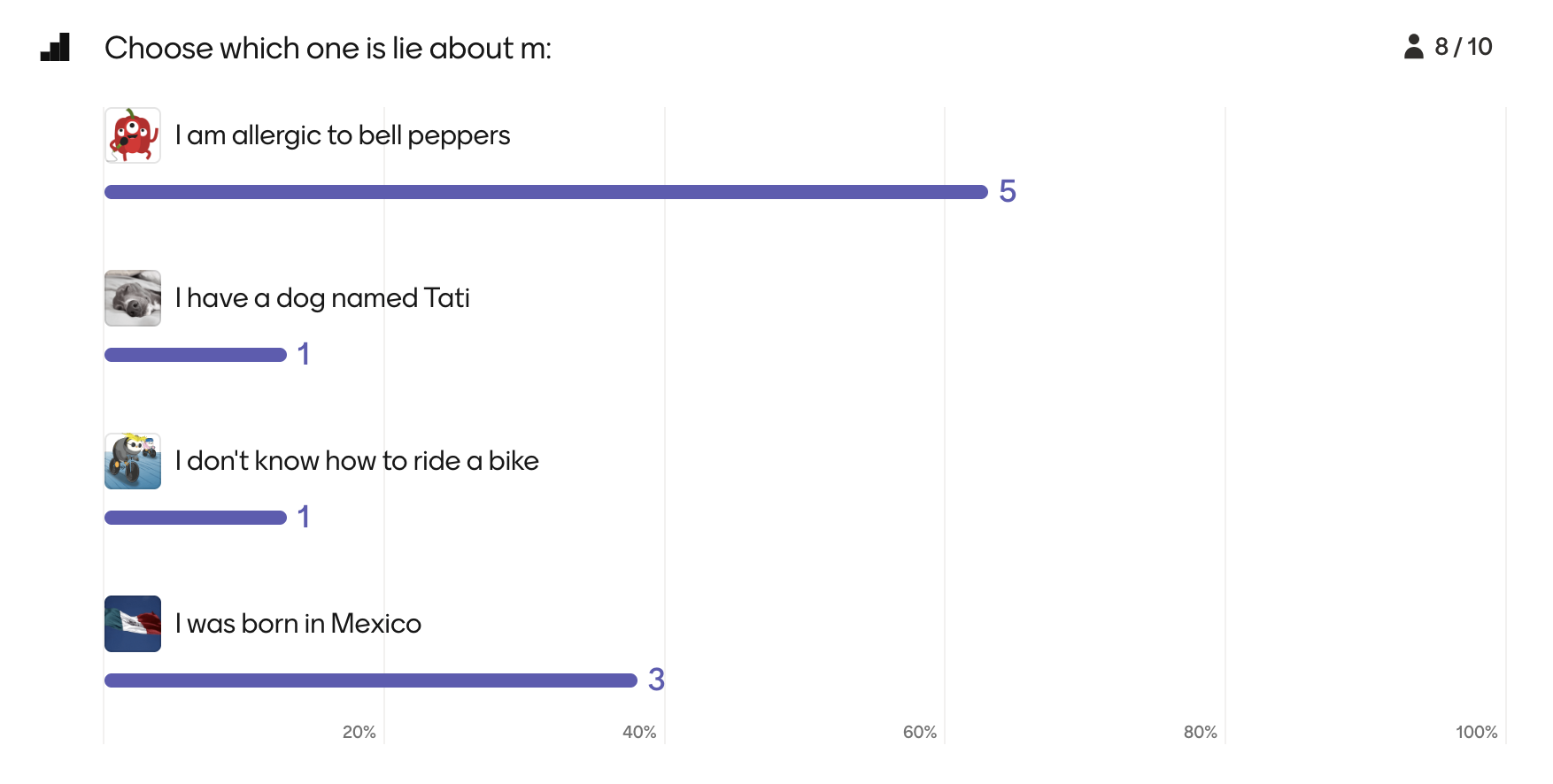
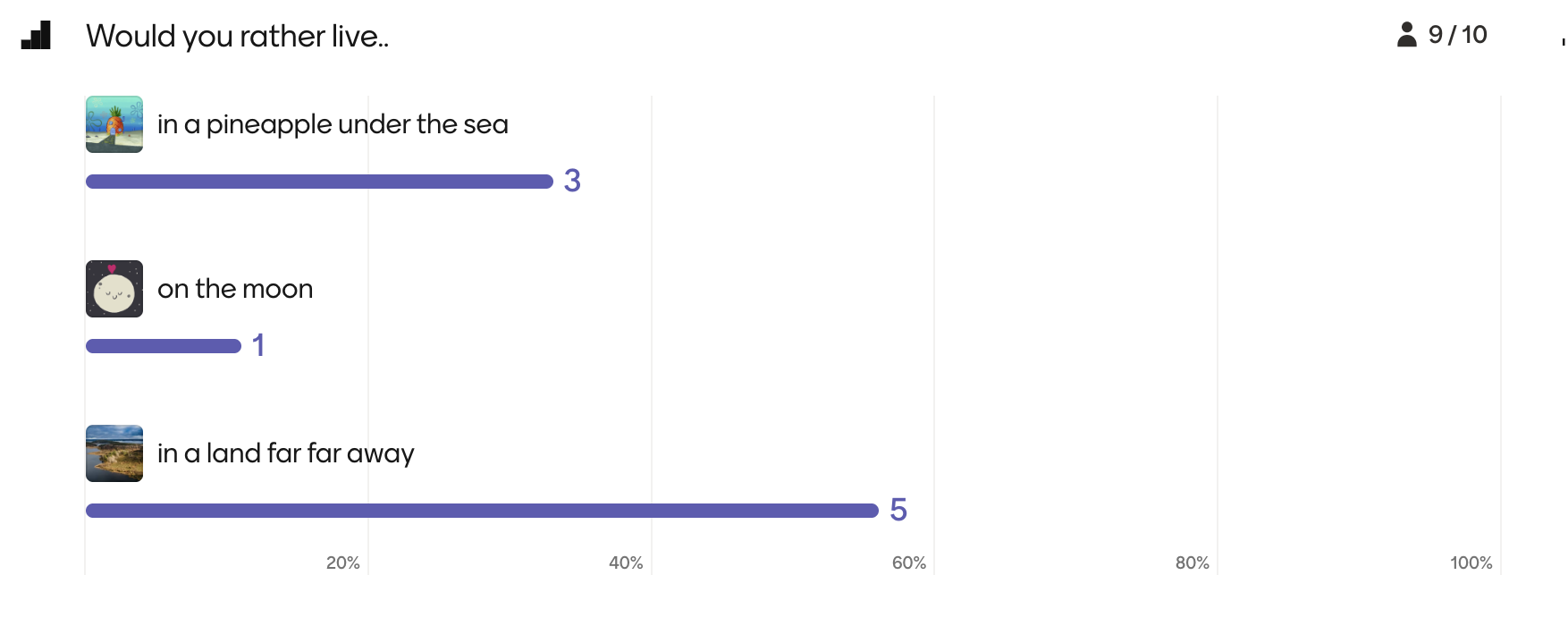
Before anyone has to speak, give them something easy to respond to, anonymously if possible. I use a live polling tool so responses appear in real time and students can participate without pressure. Mentimeter (the one I use), Poll Everywhere, Slido, and Google Forms are all great options depending on your setup.
My survey always includes:
A few fun, low-stakes icebreaker question (something like: coffee or tea? beach or mountains?)
A few questions about the course final assessment: what do they already know about it? What worries them?
An open space for any questions they already have about the course
This does three things at once: it warms up the room, it tells you what they're anxious about before you've even started, and it signals that their input matters from minute one.
2. Play a Game. Seriously.
I tell my students early that I like a little competition. And then I prove it.
I introduce a physical, low-language game to get them out of their heads and into the room. My go-to is a cup-stacking card game where students work in teams and against the clock to carefully remove cards one at a time, letting cups stack as they fall. It requires focus, patience, and just enough tension to make people laugh.
3 students are playing a game to stack cups by removing cards.
You might be wondering, why does this even matter, Mariana? Because laughter helps accelerate trust. A student who has laughed with you and their classmates is a different student than one who has only sat quietly listening to policies. The game also starts breaking down walls between peers from the very first session. In the game debrief, something interesting always comes up: students naturally pitched in ideas, tweaked their approach, failed, tried again, and kept going. Nobody made it a big deal. That's exactly the culture you want in a language classroom, where trying, failing, and adjusting is the whole point.
You don't need my exact game. Any low-stakes team challenge works. The goal is energy, movement, and a shared experience that has nothing to do with grades, and in my case, I make no mention of them using other languages, or even focusing on English.
3. A Collaborative Language Challenge
Now we bring in the language, but still in a low-pressure, puzzle-style format. I use a collaborative activity where students have to work together to figure something out: think a "who is who" logic puzzle, a mystery to solve, or an information gap task where each person holds a piece of the answer. Check your institution's resource library, your department's shared materials, or published task-based learning resources for ready-made activities that fit this format.
The format matters more than the specific content here. What you want is:
Students talking to each other in the target language
A task with a clear goal so the language has a purpose
Ideally, several steps that they need to discuss and negotiate (provided it is level appropriate)
This activity also doubles as an informal placement assessment. While students work through the challenge, I get to hear them. How they construct sentences, the vocabulary they reach for, how they handle not knowing a word, whether they seem comfortable or completely lost. By the end of those 20 -25 minutes I have a much clearer picture of where each student actually is, whether the group is well-placed, and whether anyone might need a conversation about moving to a different level.
4. Read Past Student Recommendations
This is one of my favorite parts, and one of the most underused tools in any classroom.
Every semester, I end my final exit ticket with a question where I collect advice from previous students: what worked for them, what they wish they'd done differently, what surprised them about the course. Then I ask new students to read through these recommendations and find common themes.
This does something subtle and powerful: it tells students that others have sat where they're sitting and made it through. It also starts a metacognitive conversation about what strategies actually work in a language class, before you've had to lecture about it.
Don't have past student recommendations yet? Start collecting them now, at the end of this semester. One Google Form, one prompt: "What would you tell a future student about this class?" That's all you need.
I wrote a full post on how I collect and use this feedback if you want to go deeper: How to Help Future Students Succeed Using Past Students' Advice.
5. Go Through the Syllabus With Purpose
Yes, we go through the syllabus. And I mean really go through it. But rather than reading it at students, I ask them to engage with it actively. A few approaches worth trying:
Syllabus Scavenger Hunt: Students work in small groups to hunt for key information such as late work policy, number of quizzes, recommended resources, either in a timed challenge (who finds the most in 15 minutes?) or a race to finish first. Winners get a small prize: skip one weekly task, extra credit, or first pick of exam dates. Teams can swap completed hunts for peer review, or go through answers together as a class. It's fun, it builds community, and you'll hear yourself say "IT'S IN THE SYLLABUS" a lot less.
Here is my Canva template for the Scavenger Hunt, simply modify it a bit to fit your questions.
Annotated Syllabus: Give students a version they can mark up, highlight, and add notes to directly. It becomes a living reference instead of a document they never open again.
AI-Assisted Syllabus Reflection: Dr. Susan Ray's Syllabus Reflection approach uses AI to help students analyze and interact with the syllabus in a deeper way, worth exploring if you want to take it further.
After all, a student who discovered how the course works is much more invested than one who was simply told.
6. The Exit Ticket. Do Not Skip This!
This is the most important ten minutes of the day. Before students leave, I ask them to respond to my exit ticket using the Feedback functionality on Moodle. You can also do it on paper.
What is one question you still have about the course?
How confident do you feel about understanding the course expectations? (I give them options: I have so many questions / I still have a few questions / I mostly understand everything / I understand everything.)
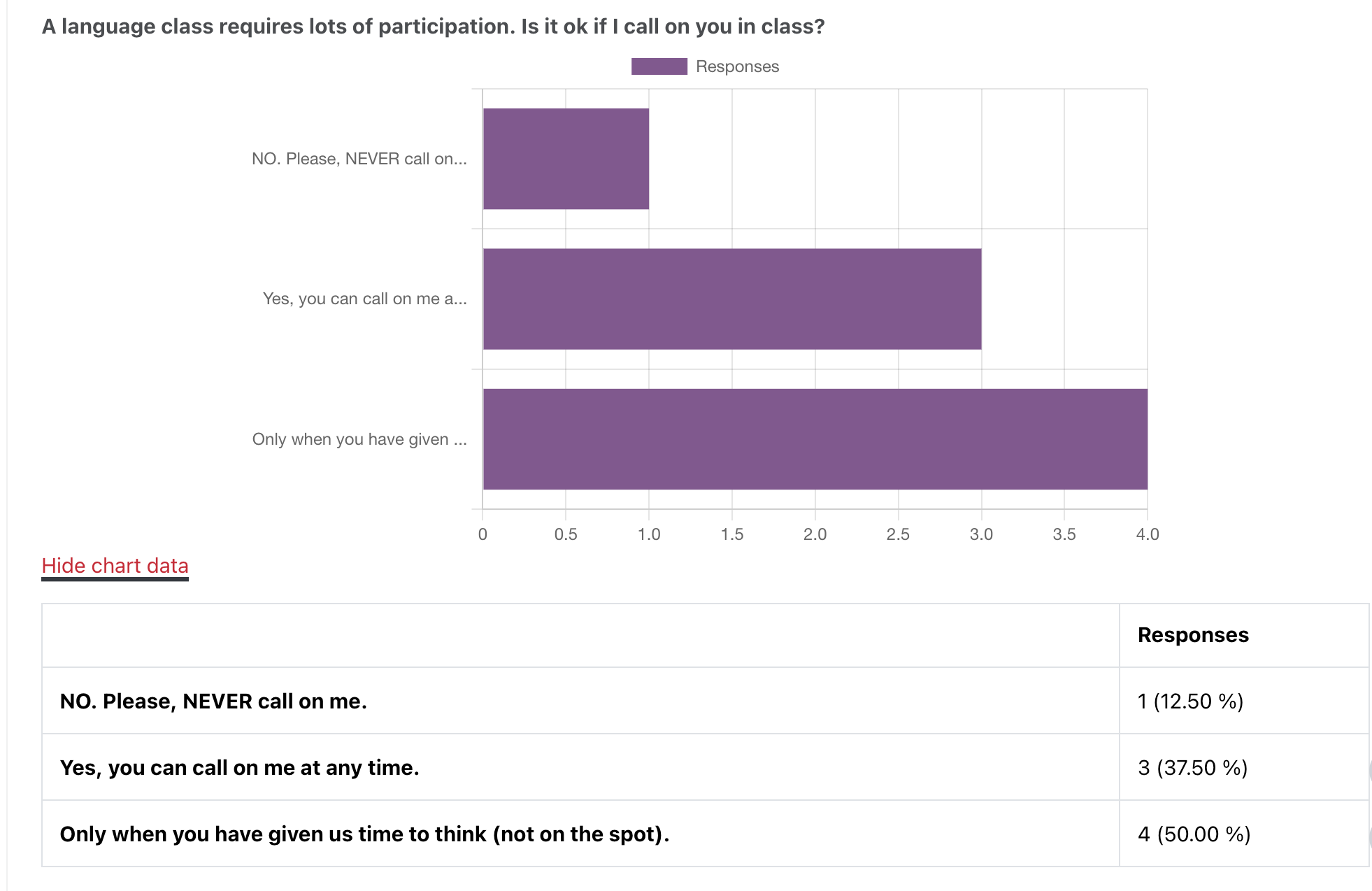
A language class requires lots of participation. Is it ok if I call on you in class? (Options: NO. Please, NEVER call on me / Yes, you can call on me at any time / Only when you have given us time to think, not on the spot.)
What helps you feel comfortable and confident in a classroom setting?
Is there anything you'd like me to know about you as a learner or person? Students usually use this space to tell me about any accommodations they need, learning difficulties, specific life situations etc.
That third question might be my favorite, as I help remove some of the anxiety students have in class. Students who say no or after thinking time get a note on my attendance list. I never cold-call them. And because they know that, they relax. Relaxed students learn more.
The last two questions are where students tell you about learning preferences, anxiety, life situations, and give you information so you might be able to better support their learning. Read every single response.
After Class: The Notes That Make You a Better Teacher
Once the class ends, I spend a few minutes writing down what I noticed and what students shared. Who seemed nervous? Who was the first to laugh? Who told me something important in the exit ticket?
I also keep a running "What's going on?" document, one per semester. When a student mentions something in class (a big exam coming up, a stressful week, a trip they're excited about), I write it down. Before the next class, I glance at it. When they walk in, I ask about it.
It takes thirty seconds. And students remember that you remembered. That's the relationship.
One more thing: I have a forum (I use Moodle, but any platform works) where I ask students to share how to pronounce their name. They can type it out phonetically, record a short audio, or link to a resource. No one should have to sit in a classroom all semester hearing their name mispronounced.
If You Only Have One Class Period
Split it like this:
Day 1: Survey + game + exit ticket. Connection first, everything else second.
Day 2: Language challenge + past student recommendations + syllabus exploration.
Frequently Asked Questions
What should a language teacher do on the first day of class?
Go beyond the syllabus. Yes, cover the logistics, but spend equal time helping students feel safe, seen, and ready to take risks in another language. A low-stakes survey, a team game, and a thoughtful exit ticket can change the entire tone of the semester.
How do I build student connection in a higher ed language class?
Start small and start early. Learn how students want to be called, ask if you can call on them in class, and keep notes on what they share. Connection is built in small, consistent moments. Checking in about something a student mentioned last week costs you thirty seconds and earns you enormous trust.
What are good icebreaker activities for a language class?
The best icebreakers for language classes are low-pressure and don't require students to perform their language skills right away. A live anonymous poll (using tools like Poll Everywhere, Slido, or Google Forms), a physical team challenge, or a collaborative puzzle are all great options. Save the speaking tasks for once students feel comfortable.
How do I handle students who don't want to participate or be called on?
Ask them directly, and before it becomes a problem. An exit ticket on day one that includes the question "Is it ok if I call on you in class?" gives students a safe, private way to tell you. Options like "NO. Please, NEVER call on me" or "Only when you've given us time to think" normalize different comfort levels. Make a note, respect the answer, and revisit it as the semester progresses.
How long should the first day of a language class be focused on connection vs. content?
There's no universal rule, but my starting point is: at least half of your first class should be dedicated to connection, community, and helping students understand how the course works. Content can wait a session, but honestly, trust should not.
What is an exit ticket and why should I use it on day one?
An exit ticket is a short set of questions students answer before leaving class, digitally, on paper, or even on the board. The goal changes depending on when you use it and what you ask. On day one, it tells you who is confused about the course, who needs accommodations, who is anxious about participation, and how each student wants to be treated. Used regularly throughout the semester, it becomes a window into your teaching, essentially, what landed, what didn't, where students are struggling, and what needs revisiting next class. The questions you ask shape what you learn, so it's worth being intentional about them. A comprehension check gives you different data than a reflection prompt, which gives you different data than an emotional check-in. All of it is useful.
A few parting words…
None of this is about entertaining your students or avoiding the hard work of language learning. In my experience, students who feel seen take more risks. Students who trust you ask more questions. Students who laugh together on day one are more likely to support each other on day forty.
This might sound corny, but the syllabus tells them what the course is. How you spend day one tells them who you are as a teacher, and how much you value them.
Make it count.
Mariana Ramírez is an AI & EdTech specialist for language educators. She offers workshops and consulting for language teachers and departments navigating the AI era. Work with her here.